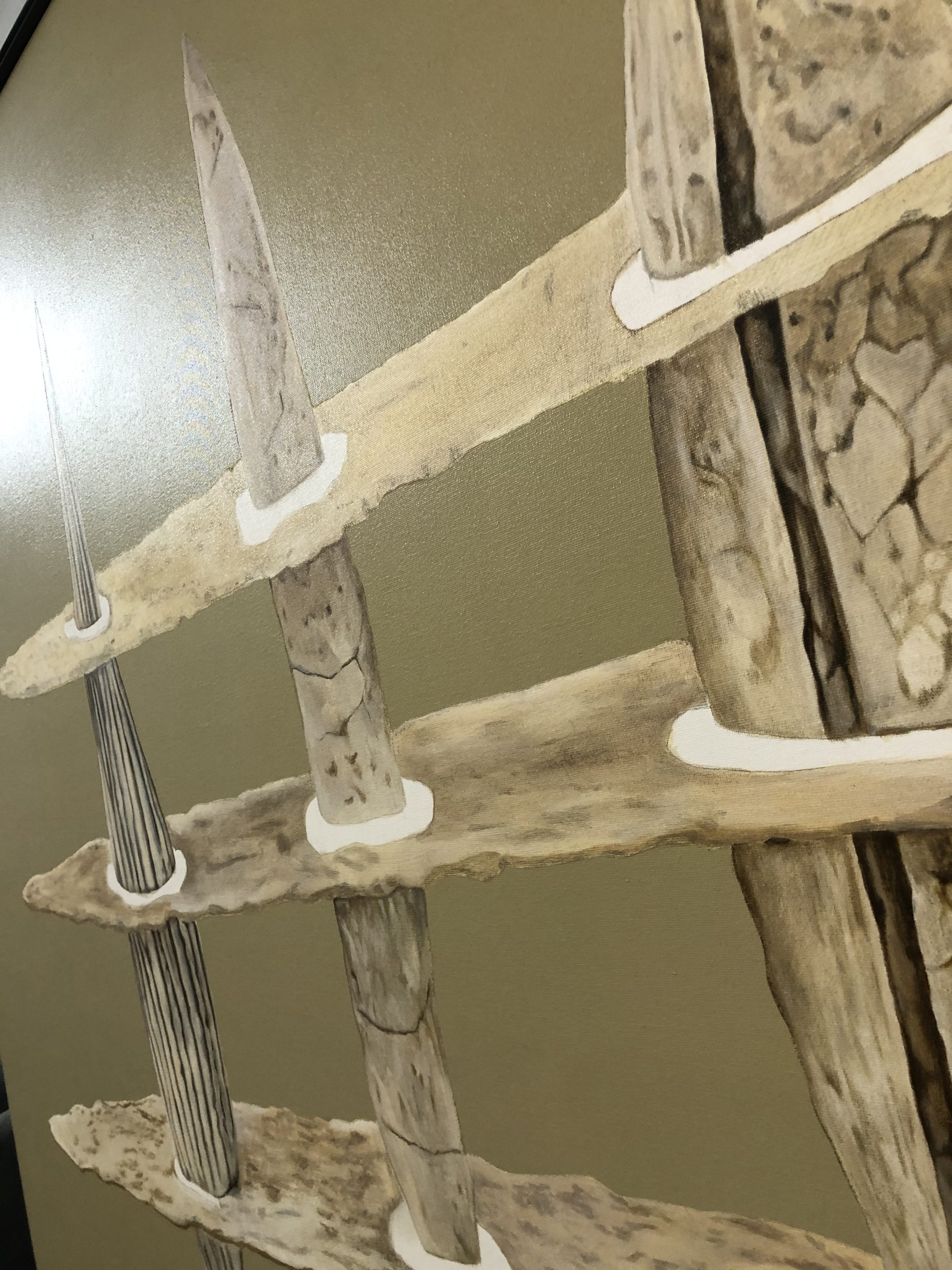
In the studio, one of the greatest moments of magic for me is when I first mix interference pigments with oil and apply them to the canvas. These tiny mica particles, coated in thin layers of titanium oxide, do not absorb light but rather split and reflect it—just like the surface of a butterfly’s wing or the inside of a pearl shell. Depending on the viewing angle and the type of light—natural, gallery lighting, or even UV—the colors come alive and shift: a deep blue suddenly transforms into brilliant violet, emerald green drifts toward gold, and my holographic forms seem to breathe and gain profound depth. These pigments allow me to make reality multi-layered; just as in the holographic universe theory, where every part contains the information of the whole, here each layer of color holds countless potential hues. When a visitor sees the work for the first time and, with a slight turn of the head, watches the colors “move,” that astonished smile and mesmerized gaze reassure me that this small scientific enchantment is worth every hour of experimentation and layering.